Now that the weather is warm in east Tennessee, the flies are coming out in a big way. One afternoon recently I happened to catch Valentine coming in for a drink and noticed his face (mostly his eyes) were covered in flies. We probably waited a little too long to begin our fly control routine but the good news is, we can catch up. Flies and horses go together but our fly control system works very well. We use a combination of the following things:
- Fly masks
- Feed-through fly control
- Equi-Spot on-horse
- Liquid fly traps
- Mr. Sticky Roll Fly tape
- Fly spray (as needed)
- Fly predators
- Aerated manure composting – coming soon
- Chickens
Wow, that seems like a lot, but let me explain. Flies come in cycles with adults living from 3-4 weeks. But before the adult stage they move from egg to larva to pupa stage in 9-25 days (feeding on organic material) for house flies and 23-52 days (feeding on blood) for stable flies. So any kind of fly control you implement today won’t be noticeable for several weeks, which is why you need to get started as soon as possible. There are so many ways to control flies but not all of them target the same part of the life cycle. So let’s explore my list in more detail, with prices:
Fly Masks – we use fly masks (our current favorite is the Farnam SuperMask II) because they have an immediate impact. I noticed flies on my horses’ eyes and was immediately able to rectify the problem. The first time we ever used a fly mask, our horses didn’t particularly like the velcro ripping sound but eventually got used to it and give us no trouble at all putting them on in the morning or removing them in the evening. Yes, that’s right, you need to put them on and take them off daily. Although the masks have the added benefit of cutting down on light (kinda like horsey sunglasses!), this obviously isn’t a good thing at night. And even though the screen of the masks make it look like horses wouldn’t be able to see out of them, I’ve actually strapped one on and driven down our street to prove a point. You can see fine through the screen mesh, as long as it’s day. Cost is $15-$20 each but they last a long time if you take care of them.
Feed-through fly control – I was initially concerned with feeding insecticide to my horses but it’s a very small dose for them and has proven effective and safe in horses and cows for many years. Feed-through fly control works well because it keeps the flies from hatching in manure. You won’t notice the benefit for weeks but this method works very well if you stick with it all summer. Some feed stores sell it in 2 pound tubs and higher, some feed stores actually sell it in bulk so you can buy a small bag for less than $10. I’d recommend sticking with a well known brand, though and do some research before selecting which brand you’re going to trust.
Equi-Spot on-horse – Equispot is applied directly to the body of your horse, mostly down their spine and on their legs. It’s effective for a couple of weeks at repelling and killing “house, stable, face and horse flies, plus eye gnats and ticks on horses”. This is the only method we use to treat against ticks, so it’s pretty important. It needs to be applied every 2 weeks or so but the benefits are worth it and it takes affect immediately. Oh and it has a nice citronella smell and is water resistant. The price is around $11 for a package of three applicators (one applicator per horse, per application). Sometimes Jeffers has a deal where you get one free if you buy 3 or 4 packages.
Liquid fly traps – I saw these at my local country hardware store one day and decided to give them a try. These are clear plastic bowls with a funnel underneath that the flies use to enter the trap. They’re attracted by fly stink bait (trust me on this – WEAR GLOVES to mix it. The smell stays on you for days otherwise.) and can’t escape, eventually drowning. These are cheap (around $5 each) and easy to setup. You open up the stink bait, add water, swirl it around a little, turn it upside down and hang it somewhere. In weeks you’ll have a disgusting pool of dead flies. It’s gross but it works. Since it uses a fly attractant, don’t hang in the barn.
Mr. Sticky Roll Fly tape – I saw this at Tractor Supply one day and had to try it. It’s a new take on the idea of fly tape. Instead of those cylinders handing from the ceiling with yellow tape on them, the Mr. Stick fly tape is more of a thick string on a set of rollers you can string above your stalls. The tape is long – 81 feet. Flies are attracted to it, stick and die. When the tape is full, you turn the roller to reveal more. Much faster than the old fashioned fly tape and the price is low. Less than $10 for 81 feet.
Fly spray (as needed) – Our horses HATE this stuff but probably because it comes in a spray bottle. It’s not very water resistant and needs re-applying often. But where fly spray makes sense is for as-needed situations, such as around (not on) a healing wound or on the legs. To minimize the spray bottle effect, we spray onto a cloth and them rub the cloth on the horses. This works especially well on their faces. This stuff is pretty expensive, running $10-$25 per bottle, so we use it sparingly.
Fly parasites – Fly parasites (really gnat-sized parasitic wasps) remind me of alien science fiction movies where the alien hatches from it’s prey. That’s pretty much how it works with fly predators, too. And gross as that may be, these have been effective at fly treatment for us for years now. You subscribe to receive regular shipments throughout the fly season and every 3-4 weeks a shipment comes in a padded yellow envelop. You have a few days before the parasites hatch. Once they begin hatching (they look like little gnats), you spread them around where flies are likely to be, such as a manure pile. And although I at first was concerned with introducing a parasite near my horses, they are only interested in pillaging the flies. Price is around $15-$20 per shipment.
Aerated manure composting – I’ve been talking about this for a while now but ultimately we need to do something about our manure. That’s what seems to attract flies the most and we have plenty of it. Of course you should endeavor to keep manure away from the barn as much as possible but the reality is, this isn’t always possible. We’ve been looking into aerated composting as a way to not only deal with the fly problem but also to ensure that manure is fully composted, killing weed seeds and harmful bacteria before we spread it in the pasture. Composting is a pain, normally, but aerated composting uses perforated pipe, a fan and timer to inject oxygen into the manure pile periodically, stimulating bacterial breakdown. It’s said you can convert manure to safe compost in 30 days using this method, without manually turning the pile. We haven’t done it yet but we’ve scoped out a location and made some napkin drawings of what it would look like. Cost is around $1,000-$2,000 so we’ve been putting it off. There are a few companies selling aerated composting systems and we’re hoping to doing a review in an upcoming series of posts.
Chickens – We were given some chickens last year and have enjoyed almost everything about having them. One bonus is that chickens seem to love eating fly larvae, so I have to include them in our fly management routine. They need very little care, don’t smell (unless you have a lot of them) and skip the rooster and you won’t have to worry about baby chickens. The eggs are great, too. The biggest problems we have with chickens are what to do with all of the eggs (one per hen per day most of the year) and since we free-range our chickens, predators. We’ve been pretty lucky so far but there is little we could do to save them if a wandering dog went into to predator mode.
As with anything relating to chemicals and your horses, make sure you do research before pursuing any of the insecticide options in particular. Some don’t mix well with others and your safety and your horse’s safety should be the first concern.
So that’s what we do to handle the annual fly problem. Are you doing anything different?
05-20-2010 Update: added chickens to the list!

 Bush Hog is an actual company. “Bush hogging” has become a common term for cutting with a tractor-drive rotary mower. Kind of like calling a tissue a kleenex, which is also a brand name.
 By now you’ve heard about or experienced first hand the large and unusual storm system that raked through the south last Wednesday (4/27/11). A week ago today, we strolled outside to discover the damage caused by severe thunderstorms that went on and on from around 4 PM through midnight. Yesterday we learned that nine tornadoes were officially recorded in our small east Tennessee county alone, knocking down trees and power lines, destroying homes and barns and in some cases killing people and livestock. I’ve never seen a storm like that. It was one serious thunderstorm after another for almost eight hours straight. At one point the wind blew so ferociously my family and I grabbed blankets and pillows and took cover in the center of our house, away from windows. We’d return to that spot a few times that night, as the wind howled and local radio stations and Twitter updates warned that strong cells were approaching, hail was on the way or apparent tornadoes were on the ground and moving fast. It was scary and exhausting.


 Third in a series of posts about our efforts to reduce mud around our horse barn and in our pasture. In this post we reveal an inexpensive solution that seems to be working.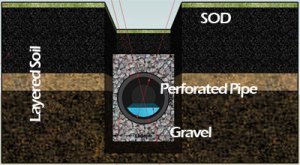

 Since Pop and Granny moved in on property adjacent to the pasture, it made sense to replace this fence first. So we started by selecting a spot for a walk-through gate. Normally this would be in the shape of a V but we’re building a hybrid version in the shape of a U. Basically it’s wide enough for a human to slide through but not a horse. If built right, you don’t need to open and close anything because the horses won’t fit in. From here, we’ll replace a section at a time until all of the barbed wire between the two properties is gone.


